
- Rahmatulla Syed
- 0 Comments
From Hive to Jar: How Pure Honey Is Naturally Made
Every drop of pure honey tells a story—one that begins in nature, guided by bees, and ends in your kitchen. Unlike industrial sweeteners, real honey is not manufactured. It is carefully crafted by bees and preserved through gentle, minimal human intervention. Understanding this journey helps you appreciate why truly raw honey is so special.
The Natural Journey of Honey
Honey production is a remarkable process that involves the perfect harmony between bees, flowers, and nature. From nectar collection to natural ripening, every step is essential in creating honey that is rich in flavor, nutrients, and authenticity.
Step-by-Step: From Hive to Jar
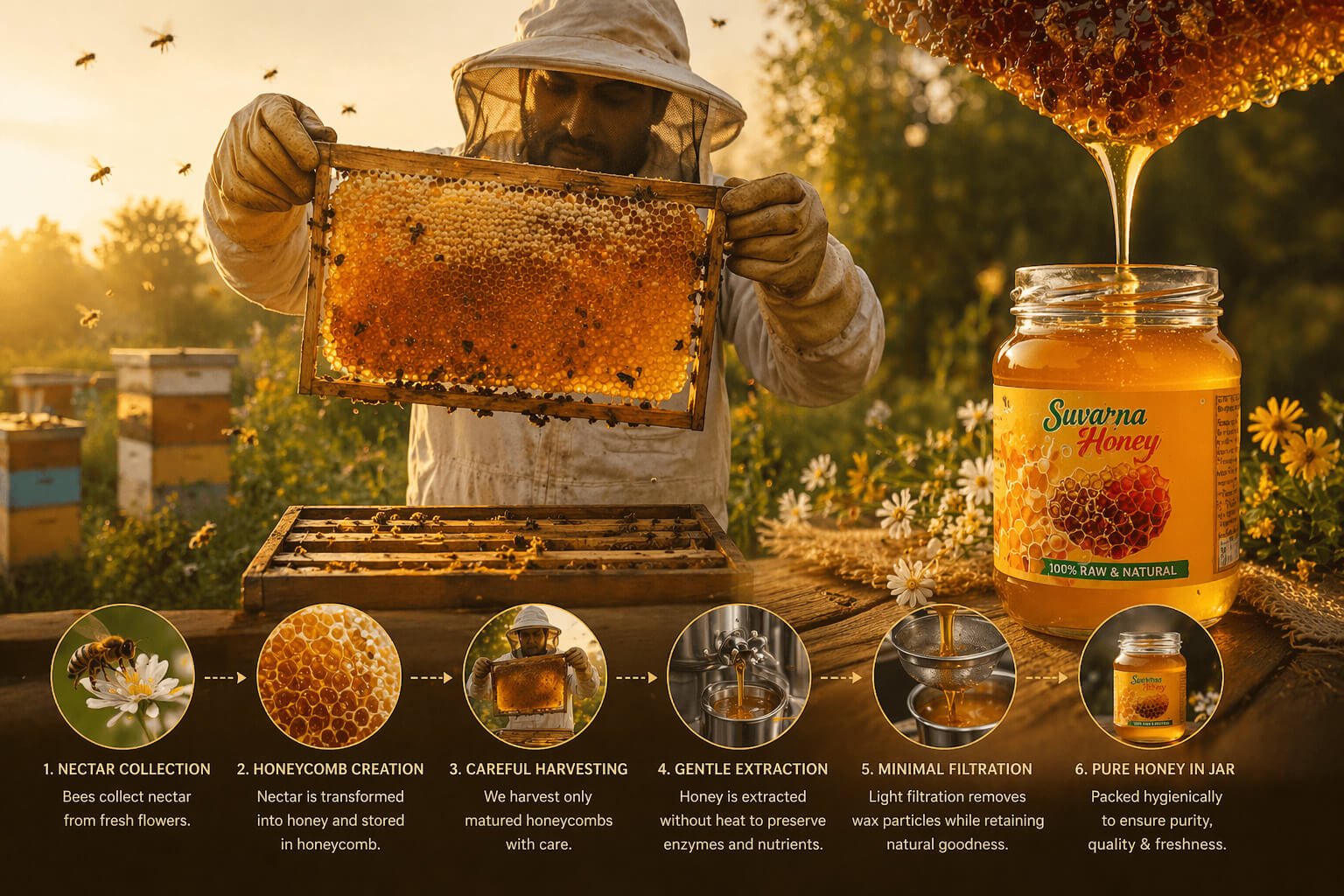
Bees travel across fields, forests, and flowering plants to collect nectar. Each drop of nectar carries the essence of the flower, which later defines the taste and aroma of honey.
Inside the bee, nectar begins to transform through natural enzymes. These enzymes break down complex sugars, starting the journey from nectar to honey.
Bees deposit nectar into honeycomb cells. Here, it begins to thicken as moisture slowly evaporates, turning it into a denser substance.
Bees fan their wings to reduce moisture content. Only when honey reaches the perfect consistency do bees seal the comb with wax—this indicates full ripening.
Beekeepers collect only sealed honeycombs. This ensures that the honey is mature, stable, and naturally ready for consumption.
Honey is extracted without applying heat. Gravity or mild spinning methods are used to preserve natural enzymes and nutrients.
Light filtration removes wax particles while retaining natural pollen and beneficial compounds.
Finally, honey is carefully packed in clean, controlled conditions to maintain freshness, purity, and quality.
Why This Process Matters
The way honey is handled after it leaves the hive determines its quality. When honey is heated or over-processed, it may lose its natural enzymes and aroma. In contrast, gently handled honey retains its full nutritional profile and authentic taste.
This is why naturally ripened, raw honey is preferred by those who value purity, wellness, and real flavor.
What Makes Pure Honey Different
Pure honey stands apart because it reflects its origin. Its flavor changes with seasons, its texture varies naturally, and its color depends on the flowers visited by bees. These variations are not flaws—they are signs of authenticity.
Frequently Asked Questions
It ensures the honey has low moisture content, making it stable, flavorful, and naturally preserved.
No. Heating is avoided to preserve enzymes, nutrients, and natural aroma.
Crystallization is a natural process and a sign of pure, unprocessed honey.
Final Thoughts
From the moment bees collect nectar to the time honey reaches your jar, every step matters. Pure honey is the result of patience, natural processes, and careful handling—not industrial shortcuts.
When you choose naturally made honey, you are not just choosing sweetness—you are choosing authenticity, purity, and a connection to nature.